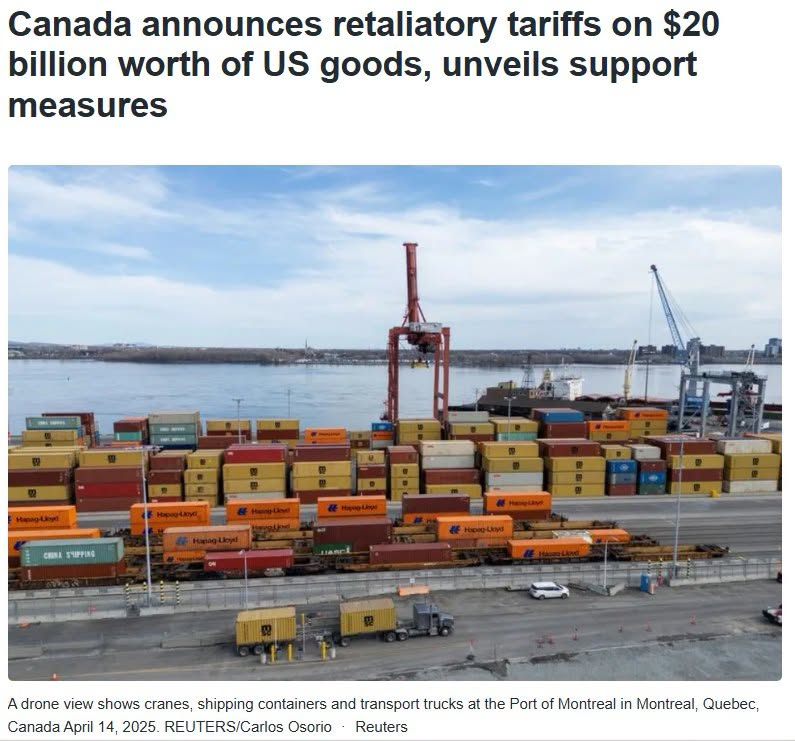
Ottawa will impose new counter-tariffs as of September 8 on $27.6 billion worth of U.S. products. Steel, aluminum, appliances, tools and electronics are among the categories to watch for construction companies.
Ottawa moves to respond
Canada’s response to the new U.S. tariffs is now known.
On August 25, the federal government announced that new counter-tariffs will take effect on September 8, 2026 on roughly $27.6 billion worth of products from the United States.
Ottawa is applying a so-called "dollar-for-dollar" approach, with different duty levels depending on the product category.
Certain steel and aluminum products will face duties of up to 50%. Several derived products, appliances and other categories will be hit at 25%, while certain tools and electronic products will be affected at 15%.
In total, about 700 products are affected.
For the construction industry, what was a fairly abstract trade dispute now becomes measures that can have a direct effect on certain purchases, supply and bids.
What construction companies should watch
The impact will obviously not be the same for every company.
Everything will depend on the actual origin of the materials, equipment and components used.
General and specialized contractors, developers, distributors and suppliers should pay particular attention to:
- steel products;
- aluminum products;
- certain transformed metal products;
- appliances and equipment from the United States;
- certain tools;
- certain electronic components.
A product bought from a Canadian distributor may itself come from the United States.
So it is the entire supply chain that needs to be looked at, not just the address of the immediate supplier.
Fall 2026 and 2027 bids deserve particular attention
For a company preparing a bid right now, the main risk is simple: using a price today that may no longer be valid when the product actually needs to be purchased.
With the September 8 effective date, several checks become relevant before maintaining or renewing a major bid.
1. Check the origin of materials
Ask your suppliers which products are manufactured in or imported from the United States.
2. Confirm how long prices remain valid
A price received in August will not necessarily still apply several weeks or months later.
3. Check price-adjustment clauses
Contracts and bids should be reviewed to determine who absorbs an increase resulting from a new tariff or a significant change in supply cost.
4. Consider early purchases
For equipment or materials already selected, some companies may want to check whether a purchase or order can be placed before the new measures take effect.
This decision must obviously be made based on the real needs of the project and the conditions offered by the supplier.
5. Look at Canadian alternatives
A higher cost on certain U.S. products can also change the competitiveness of a product made in Quebec or elsewhere in Canada.
And that is probably one of the most interesting consequences to watch for our industry.
An opportunity for some Quebec manufacturers and suppliers
A tariff war creates constraints, but it can also shift demand.
If certain U.S. products become noticeably more expensive in Canada, buyers will have more reasons to compare the solutions available here.
For some Quebec manufacturers, processors and distributors, this new reality could therefore represent an opportunity to win new clients or recover some of the purchases previously directed to the United States.
Companies able to quickly demonstrate their production capacity, lead times, prices and product availability could be particularly well positioned.
Ottawa also announces $7.5B in support
The federal government is pairing its counter-tariffs with about $7.5 billion in new or enhanced measures for businesses and workers affected by the trade dispute.
These measures are intended in particular to support business liquidity, SMEs, investment and workers exposed to the consequences of U.S. tariffs.
For Quebec manufacturers, processors and suppliers with significant exposure to the U.S. market, these programs will also be worth watching.
What we will follow at EQCO
The next step will be to look much more closely at the products affected and how suppliers react over the coming weeks.
At EQCO, we will follow in particular:
- price changes announced by suppliers;
- commonly used construction materials and equipment that are affected;
- consequences for supply lead times;
- new possibilities for Canadian manufacturers;
- assistance programs available to Quebec businesses.
For contractors, the best short-term reflex remains simple:
before renewing a major bid, check the origin of your materials and how long the prices obtained from your suppliers remain valid.
September 8 is coming fast.